Grave of Rebbe Nachman - circa 1920 (man at entrance - Reb Alter Tepliker הי"ד)

Friday, November 21, 2025

Parshat Toldot - Re-Digging Wells

 BH


Yitzchak’s Unique Mission: Holiness That Cannot Leave the Land

In Parshat Toldot Yitzchak faces a famine – the same test Avraham had endured a generation earlier. Naturally, Yitzchak assumed he should follow his father’s example and go down to Egypt. But Hashem intervenes directly: “Do not descend to Egypt.” Yitzchak is an olah temimah – fully consecrated, like a korban placed upon the altar. Having been bound on the Mizbeach at the Akeidah, he carries a level of sanctity that cannot be exposed to the spiritual contamination of the Diaspora.

Hashem therefore commands: “Gur ba’aretz – dwell in this land.” Stay within the Holy Land, even if conditions are difficult, even if the famine is strong, even if survival seems easier elsewhere.

Why Yitzchak Was Sent Specifically to the Land of the Plishtim

Yitzchak follows Hashem’s command and travels to Eretz Plishtim, the region historically associated with what is today called Gaza. Although this region lies within the biblical borders of Eretz Yisrael, the Torah describes it with nuance – it is part of the Land, yet spiritually a lesser degree of holiness.

Rashi (26:12) highlights this tension. When the Torah says, “Yitzchak sowed in that land and found in that year one hundred measures,” Rashi explains:

Ba’aretz hahi – even though it was not as important as Eretz Yisrael itself.

How can it simultaneously be inside the Holy Land and yet not fully equal to it?

The answer lies in the identity of the Plishtim. They were not among the seven Canaanite nations destined for destruction. They were not completely depraved, nor were they granted the full spiritual elevation of the covenantal Land. They existed in an in-between zone – physically within the borders of the Land, spiritually of a different nature.

This intermediate status explains why Yitzchak is allowed to reside there. It is Eretz Yisrael – but Eretz Yisrael on a lower rung.

The Meaning Behind Yitzchak’s Descent to a Lower Level

Yitzchak remains entirely within Hashem’s command. He does not leave the Land, yet he descends to a region with reduced holiness and diminished spiritual clarity. This becomes essential for understanding the deeper theme of Toldot: Yitzchak’s avodah is not to escape downward movement, but to transform it.

Where Avraham’s holiness manifests as outward expansion—movement, conquest, journeys—Yitzchak’s greatness is inward. His greatness is diggingpurifyingredigging old wells, and uncovering buried holiness.

His first step into this mission begins right here: inhabiting a part of Eretz Yisrael that requires elevation, illumination, and spiritual reclamation.

Yitzchak’s Rising Wealth and the Envy of the Plishtim

As the famine subsides, Yitzchak remains in Gerar under the rule of Avimelech. After the initial tension – Avimelech discovering that Rivka is Yitzchak’s wife – Avimelech grants them protection and allows them to stay in the region. What follows is an unprecedented blessing. Yitzchak’s fields yield one hundredfold, and his livestock multiplies beyond measure.

So extraordinary was his prosperity that the Midrash records a striking expression:

“Better the dung of Yitzchak’s animals than the gold of Avimelech.”

Even the waste of Yitzchak’s livestock brought blessings to those who acquired it. The Plishtim saw this, grew jealous, and ultimately expelled him from Gerar. But before leaving, Yitzchak carries out a mysterious act that the Torah emphasizes at length: he redigs the wells originally dug by Avraham Avinu.

Why the Torah Highlights the Digging of Wells

The Philistines had deliberately clogged Avraham’s wells. On the surface, they offered a strategic explanation – to deprive enemy soldiers of water. Yet the Torah’s repetition and detail indicate a deeper meaning.

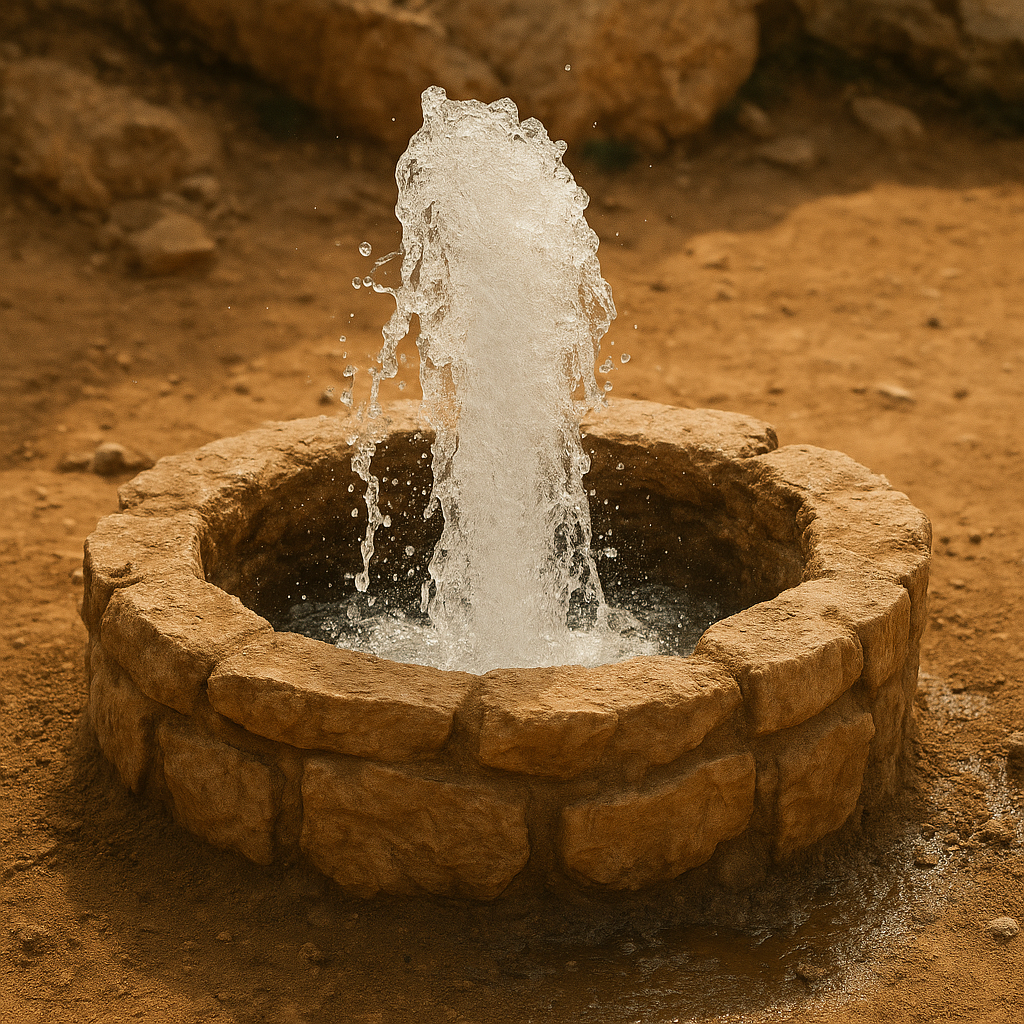
Yitzchak, before departing Gerar, reopens every sealed well, restoring the flow of living water. Each time he finds a new source, the Plishtim quarreled, claiming ownership. Yitzchak moves on, digs again, and only after repeated attempts does he finally arrive at a well over which there is no dispute.

The Torah dedicates significant space to these episodes because they embody Yitzchak’s spiritual mission: uncovering buried holiness, restoring what the forces of negativity attempt to block. The wells are symbolic vessels – channels through which divine blessing flows into the world.

Reb Noson: Philistines Represent “Mefulash” – Light Without Vessels

Reb Noson uncovers the deeper spiritual identity of the Plishtim. Their name shares a root with mefulash – an open alleyway with no walls, no boundaries, no structure. In the laws of Eruvin, a mavuy mefulash is unbounded and therefore invalid; it lacks the partitions necessary for sanctified movement.

This describes not only a place, but a mentality. Reb Noson writes:

Plishtim represent an attitude of wanting spiritual light without the vessels required to contain it.

These are people who push for religious or mystical experiences without limitation, without grounding, without struggle, without the healthy resistance that forms character and spiritual maturity. They want inspiration without effort, revelation without responsibility, ascent without inner work.

Rebbe Nachman teaches in Likutey Moharan 24 that this is impossible.

Light without vessels leads to collapse.
Elevation without boundaries leads to burnout.
A person who ascends too quickly, without the stabilizing force of obstacles and setbacks, inevitably crashes.

Judaism does not demand extremes. Deracheha darchei noam – the Torah’s ways are pleasant

The Purpose of Setbacks – Building the Vessels of Light

Rebbe Nachman introduces a core spiritual principle:

The very obstacles that seem to push a person away are Heaven’s way of helping him build the vessels to receive true light.

It is the delays, frustrations, confusions, and closed doors that shape a person into someone capable of holding spiritual energy without self-destruction. What feels like rejection is actually construction.

By contrast, the Plishtim—the mefulash mindset—seek:

  • unbounded spiritual highs

  • intensity without preparation

  • openness without structure

  • experiences without vessels

Reb Noson warns: these are the people who fall the hardest. Their light is too great for their weak vessels; their ascent too fast for their foundation.

This is precisely why the Plishtim clogged Avraham’s wells. Symbolically, they could not tolerate vessels – structures that contain blessing. Their impulse is toward openness, dissolution of boundaries, and unregulated spiritual experience.

Yitzchak, in contrast, embodies the avodah of digging vessels, redigging them, and guarding them with patience, perseverance, and humility. His work is the antithesis of the mefulash mentality.

The Plishtim Mentality – Light Without Boundaries

Reb Noson deepens the symbolism: mefulash is not only a halachic term but a worldview. The Plishtim embody a spiritual attitude that seeks unbounded illumination, extreme inspiration, and intense religious experience without the healthy boundaries, grounding, or vessels that make such light sustainable.

This mindset is destructive. People who “fly upward” too quickly – who crave only spiritual highs – inevitably plummet. Tehillim 107 describes such souls: “They rose to the heavens, they descended to the depths”: the higher they rocket without preparation, the harder they crash.

This is visible both outside and inside the Jewish world. Extremism, impatience, and spiritual intensity without inner work lead to collapse. When such people fall, they often abandon everything, adopting irrational behavior. In contrast, the person who moves slowly and steadily—embracing obstacles, accepting setbacks, and respecting boundaries—becomes strong. His vessels hold. His growth lasts.

Why the Plishtim Fought Over the Wells

The Torah’s heavy emphasis on Yitzchak and the wells becomes clear. Water represents Torah – the living, flowing light of holiness. Avraham dug the original wells – he opened channels of divine wisdom and made them accessible. Yet the Plishtim sealed them. Why would a people who crave intensity close the very wellsprings of spiritual light?

Because mefulash is a contradiction. They want endless openness, but without structure they cannot endure true illumination. When they crash, they resent genuine holiness. They envy others who maintain it. So they block the sources of light – not out of apathy, but out of spiritual instability.

When Yitzchak redigs the wells, the Plishtim immediately claim ownership. “This is our water.” Spiritually, this means: We want the high. We want the light. Give it to us without boundaries. But they cannot hold it.

Their openness is only upward – and downward. Light pours in and then spills out. There is no container, no discipline, no patience.

Yitzchak’s Mission – Building Vessels for Enduring Light

This is the heart of the parashah. Yitzchak represents gevurah – restraint, boundaries, strength, stability. His avodah is not soaring upward like Avraham’s chesed, but digging inward. Constructing vessels. Establishing permanence.

Tzaddikim like Yitzchak and Avraham spend their lives opening wells – revealing hidden light in places where it was blocked. But the difference is that they know how to balance illumination and constriction. They know how much light can be revealed at once. They open the wells and keep them open.

Plishtim cannot. Their mefulash mindset opens them to extremes – therefore, they burn out.

The Tzaddik’s Advice – How We Build Our Own Vessels

Rebbe Nachman teaches that the job of the true tzaddik is to provide guidance – advice that creates the proper vessels for a Jew to receive divine light safely. Our task is to follow that advice with simplicity and faith – step by step, consistently, patiently.

Judaism does not demand extremes. Deracheha darchei noam – the Torah’s ways are pleasant. The mitzvot are designed to uplift us gently, joyfully, and sustainably. Serving Hashem is not meant to break a person. It is meant to build him.

Even when a person does not feel spiritual excitement, the very act of following the path builds vessels – and that alone brings simcha.

Conclusion – Keeping the Wells Open

The story of Yitzchak and the wells is not ancient history. It is a living message:

  • Extremism without vessels leads to collapse.

  • Slow, steady work builds permanent spiritual strength.

  • Torah and mitzvot open wells of holiness – and with the right vessels, they remain open.

  • The guidance of the tzaddikim protects us from the instability of mefulash.

May we merit to build strong vessels, to follow the path with faith and patience, and to keep the wells of Torah open within us – so the light of Hashem can flow into every part of our lives.

Shabbat Shalom.

Meir Elkabas

This article also appears on the BRI breslov.org website: https://breslov.org/redigging-the-wells/ 

For a video presentation of the article: https://youtu.be/7MlX0gD96YI


Help support Breslov Therapy: ⁠⁠⁠⁠⁠⁠⁠⁠⁠⁠⁠⁠⁠⁠⁠⁠⁠⁠⁠⁠⁠⁠⁠⁠⁠⁠⁠⁠https://linktr.ee/breslovtherapy

This class is based on Likutey Moharan lesson 24. 

For more on this lesson: ⁠⁠⁠⁠⁠⁠⁠⁠⁠⁠⁠⁠⁠⁠⁠⁠⁠⁠⁠⁠⁠⁠linktr.ee/breslovtherapy_lesson_24

If you have been inspired by this class/lecture please share it with your friends. Thank you.

Follow us: 

https://breslovtherapy.blogspot.com

Spotify: ⁠⁠⁠⁠⁠⁠⁠⁠⁠⁠⁠⁠⁠⁠⁠⁠⁠⁠⁠⁠⁠⁠https://open.spotify.com/show/2cRAICkl6Hk9CdKUrAxSMJ

Soundcloud: ⁠⁠⁠⁠⁠⁠⁠⁠⁠⁠⁠⁠⁠⁠⁠⁠⁠⁠⁠⁠⁠@⁠breslov-therapy⁠⁠⁠⁠⁠⁠⁠⁠⁠⁠⁠⁠⁠⁠⁠⁠⁠⁠⁠⁠⁠⁠ 

FB: ⁠⁠⁠⁠⁠⁠⁠⁠⁠⁠⁠⁠⁠⁠⁠⁠⁠⁠⁠⁠⁠⁠www.facebook.com/breslovtherapytm.meir⁠⁠⁠⁠⁠⁠⁠⁠⁠⁠⁠⁠⁠⁠⁠⁠⁠⁠⁠⁠⁠⁠ 

To donate or sponsor a class: ⁠⁠⁠⁠⁠⁠⁠⁠⁠⁠⁠⁠⁠⁠⁠⁠⁠⁠⁠⁠⁠https://linktr.ee/breslovtherapy⁠⁠⁠⁠⁠⁠⁠⁠⁠⁠⁠⁠⁠⁠⁠⁠⁠⁠⁠⁠⁠ Contact us:

@: ⁠⁠⁠⁠⁠⁠⁠⁠⁠⁠⁠⁠⁠⁠⁠⁠⁠⁠⁠⁠⁠breslovtherapy@gmail.com

⁠⁠⁠⁠⁠⁠⁠⁠⁠⁠⁠⁠⁠⁠⁠⁠⁠⁠⁠⁠⁠WhatsApp: ⁠⁠⁠⁠⁠⁠⁠⁠⁠⁠⁠⁠⁠⁠⁠⁠⁠⁠⁠⁠⁠+1-732-800-1863⁠⁠⁠⁠⁠⁠⁠⁠⁠⁠⁠⁠⁠⁠⁠⁠⁠⁠⁠⁠⁠⁠⁠⁠⁠⁠⁠⁠⁠⁠⁠⁠⁠⁠⁠⁠⁠⁠⁠⁠⁠⁠⁠⁠#breslov⁠⁠⁠⁠⁠⁠⁠⁠⁠⁠⁠⁠⁠⁠⁠⁠⁠⁠⁠⁠⁠⁠⁠ ⁠⁠⁠⁠⁠⁠⁠⁠⁠⁠⁠⁠⁠⁠⁠⁠⁠⁠⁠⁠⁠⁠⁠#breslovtherapy⁠⁠⁠⁠⁠⁠⁠⁠⁠⁠⁠⁠⁠⁠⁠⁠⁠⁠⁠⁠⁠⁠⁠ ⁠⁠⁠⁠⁠⁠⁠⁠⁠⁠⁠⁠⁠⁠⁠⁠⁠⁠⁠⁠⁠⁠⁠#rebbenachman⁠⁠⁠⁠⁠⁠⁠⁠⁠⁠⁠⁠⁠⁠⁠⁠⁠⁠⁠⁠⁠ ⁠⁠⁠⁠⁠⁠⁠⁠⁠⁠⁠⁠⁠⁠⁠⁠⁠⁠⁠⁠⁠#rebnoson⁠⁠⁠⁠⁠⁠⁠⁠⁠⁠⁠⁠⁠⁠⁠⁠⁠⁠⁠⁠⁠ #likuteymoharan#likuteyhalakhot #likuteytefilot #meirelkabas #simcha


Thursday, November 13, 2025

Parshat Chayey Sarah - Lineage over Righteousness

 BH


The Dilemma of Lineage and Righteousness

After the passing and burial of Sarah Imeinu, Avraham Avinu turns to the task of finding a suitable wife for his son Yitzchak. The Midrash explains that the Akeidah – the binding of Yitzchak – awakened Avraham to this urgency. When Hashem told him, “Through Yitzchak your offspring will be called,” and then commanded him to offer Yitzchak as a sacrifice, Avraham realized that had he already arranged Yitzchak’s marriage, there would have been continuity even if the Akeidah had occurred.

The Midrash teaches that Avraham faced a profound dilemma – Yichus or Tzidkut: should he seek a bride with pure lineage, descended from his own family, or should he prioritize righteousness itself, even from a different and base background?

At first, Avraham leaned toward lineage. His extended family – Nachor, Haran, and their descendants – were from the line of Shem, blessed by Noach. Avraham was living among the Canaanites, descendants of Cham, who had been cursed by Noach: “Cursed be Canaan, a slave of slaves shall he be.” Avraham feared mixing this lineage into the covenantal seed of Yitzchak.

Yet after the Akeidah, his perspective shifted. Seeing how close he came to losing Yitzchak, he said, “I should have already sought a righteous wife for him, even if not from my lineage.” He decided to consider the righteous women of his time – the daughters of Aner, Eshkol, and Mamre, his close allies and students, described by the Torah as ba’alei brito shel Avraham – partners in Avraham’s covenant with Hashem.

The Counsel of Mamre

When Hashem commanded Avraham to perform the Brit Milah, Avraham consulted these three friends. The Midrash says:

  • Aner advised against it, fearing it would weaken Avraham and leave him open to attack.

  • Eshkol warned it could lead to sickness or death.

  • Mamre, however, rebuked Avraham: “You ask me? If Hashem commands you, there is no question – do it!”

Because of this, Hashem later appeared to Avraham “in the plains of Mamre” – rewarding him for the faith and clarity that Mamre had encouraged.

Rabbeinu Bachya offers a remarkable interpretation: the very name Mamre (ממרא) encodes the four miracles that Mamre reminded Avraham of – each proof that Hashem would protect him again:

  • Mem – Melachim (the kings) whom Avraham defeated.

  • Mem – Milah (the circumcision) itself.

  • Resh – Ra’av (the famine) that Hashem saved him from.

  • Aleph – Esh (the fire) of Ur Kasdim, from which Avraham was miraculously delivered.

Mamre’s name thus symbolizes his message: the same God who saved you before will save you again.

The Midrash adds another layer: the word Mamre connotes boldness – mered, holy defiance. As a devoted disciple, Mamre spoke sharply, even audaciously, to awaken Avraham’s clarity. Avraham, in turn, deliberately invited this test – he sought to manifest the Yetzer Hara through doubt, so that by choosing faith once more, he could overcome it.

Sparks from the Chamber of Exchanges

Reb Noson explains that Aner, Eshkol, and Mamre were not just random allies – they embodied sparks originating from the Chamber of Exchanges (Heichal HaTemurot). Their very spiritual root was tied to a domain where good and evil intermingle, where the Yetzer Hara swaps truth for falsehood and purity for impurity.

This is why their advice was risky territory. Even though they were righteous converts and loyal companions of Avraham, their spiritual footing remained connected to this unstable domain. And yet Avraham specifically sought them out when asking about Brit Milah.

Why?

Because Avraham wanted to channel the entire struggle of the Yetzer Hara into one front – he chose this to be the battleground. If he could withstand the challenge of doubt that came disguised inside the advice of people rooted in the Chamber of Exchanges, he would conquer the test at its source.

This explains:

  • Why Mamre is mentioned last – acharon acharon chaviv – because he rose above the distortion of his spiritual root and gave the clearest answer.

  • Why Hashem always revealed Himself to Avraham “in Elonei Mamre” – because Mamre’s clarity broke through a domain built on confusion.

This background sets the stage for the parshah’s central question:
Should Yitzchak marry based on lineage or righteousness?

Hashem’s Instruction: Lineage Comes First

After the Akeidah, Avraham momentarily thought:
Perhaps I should stop waiting for the perfect lineage. Let Yitzchak marry a righteous girl – even from Aner, Eshkol, or Mamre.

Hashem immediately revealed otherwise:

“The true zivug for Yitzchak has just been born.”

That girl was Rivka, born at that very moment. Avraham was instructed to wait three years and then send Eliezer to his own homeland to arrange the match.

Thus, when Avraham made Eliezer swear not to take a wife from the Canaanites, he was reaffirming:

  • Lineage must be preserved for Yitzchak,

  • Because Yitzchak is “an olah temimah,” a pure, unblemished offering,

  • And may not leave the Holy Land or be mixed with the cursed lineage of Canaan.

Only a girl from Avraham’s extended family – descendants of Shem – was suitable.

Even if a Jew falls and becomes entangled in the chamber of exchanges, he is never spiritually doomed

Eliezer’s Oath and the Backup Plan

Eliezer asked the obvious question:
What if the girl refuses to come? Should I bring Yitzchak there?

Avraham answered with absolute clarity:

  • “No. Never take my son out of the Land.”

  • If she refuses, Eliezer is released from the oath,

  • And then Yitzchak may marry from the righteous daughters of Aner, Eshkol, or Mamre.

They were the backup plan – righteous but lacking lineage.

Rashi explains that while righteousness is usually the primary factor – even a mamzer talmid chacham is greater than a Kohen Gadol – Yitzchak was different.

Yitzchak was the foundation of Am Yisrael, whose descendants would later enter the diaspora – the spiritual counterpart of the Chamber of Exchanges. His roots needed to be completely firm, unblemished, and anchored in the purest possible lineage.

And in the end, Hashem provided both:

  • Rivka had perfect lineage
  • Rivka was personally righteous, even at age three
  • Eliezer’s prayer was accepted

The zivug of Yitzchak and Rivka became the perfect union to build the next stage of the Jewish people.

The Enduring Strength of Yitzchak and Rivka’s Foundation

This brings us back to the core message of the parshah. Yitzchak could not marry from Aner, Eshkol, and Mamre – despite their righteousness – because he had to remain completely pure, an olah temimah. Their daughters may have been personally worthy, but their roots were still tied to the chamber of exchanges. That spiritual instability could, at any moment, reawaken and pull downward. Yitzchak, as a tzaddik ben tzaddik, required a wife who matched his lineage, not just personal merit, in order to establish a foundation capable of upholding the future of Am Yisrael.

Avraham, a tzaddik ben rasha (even though Terach eventually did Teshuvah, still, compared to the calibre of Avraham, he was considered unworthy), had the strength to elevate what was damaged; Yitzchak did not come from such brokenness, and therefore his foundation had to be firm, untainted, and pure. Rivka – born from the family of Shem – provided that foundation. Because of their marriage, every Jew carries within their spiritual DNA a point of holiness that cannot be extinguished. Even if a person falls into the chamber of exchanges, becomes confused, trapped, or spiritually distant, one thing remains unchanged: I am a Jew. I have a pintale Yid. I can always come back.

This is the power of lineage over personal righteousness in the specific case of Yitzchak Avinu. His marriage needed to produce a nation capable of withstanding endless exiles, distortions, temptations, and spiritual confusion – while still retaining the inner pull to return to Hashem.

Why Aner, Eshkol, and Mamre Remained the Second Option

Still, it’s no coincidence that Avraham lists all three as the fallback option. Though they were Canaanites and came from the chamber of exchanges, each of their names hints to a special virtue:

  • Aner can be read as Ayin–Ner – 70 (the seventy nations / facets of Torah) shining as a ner, a candle. Aner hints at the ability to illuminate holiness hidden among the nations.

  • Eshkol evokes Ish Eshkolot – the Torah’s term for a person of many talents, a cluster of virtues, someone who mastered many areas of Torah.

  • Mamre, as seen earlier, embodied holy boldness and deep faith, his very name hinting to malchut, milah, ra’av, esh – the four salvations he reminded Avraham of. His name also connotes the exchange (המרה) of the chambers.

Each carried a powerful spark, even if their lineage was blemished. Had Rivka not existed, Avraham was prepared to rely on their righteousness – but only as a distant second choice, because their roots were spiritually unstable.

The Eternal Gift We Inherited

And so the parshah reveals a profound encouragement for us. Even if a Jew falls, even if he becomes entangled in the chamber of exchanges, he is never spiritually doomed. Our foundation – sealed through the holy union of Yitzchak and Rivka – is unshakeable. That pure lineage means that no matter how far we drift, we retain an eternal ability to return.

This is why their names are highlighted in the Shabbat morning tefillah, in Befi Yesharim Titromam, where the rashei teivot spell “Yitzchak” and “Rivka.” And this is why Nishmat – the tefillah of pure gratitude – is tied to them. Their marriage formed the bedrock of Jewish identity, enabling us to say Modeh Ani every morning with sincerity. I woke up. I am a Jew. I have a foundation. And because of that, I can give thanks.

May we merit to appreciate this deep gift – the strength to rise, to return, and to reconnect – no matter the darkness or confusion around us. Shabbat Shalom.

Meir Elkabas

This article also appears on the BRI breslov.org website: https://breslov.org/lineage-over-righteousness/ 

For a video presentation of this article: https://youtu.be/SU_g76aIKOk


Help support Breslov Therapy: ⁠⁠⁠⁠⁠⁠⁠⁠

⁠⁠⁠⁠⁠⁠⁠⁠⁠⁠⁠⁠⁠⁠⁠⁠⁠⁠⁠⁠https://linktr.ee/breslovtherapy

This class is based on Likutey Moharan lesson 24.
For more on this lesson: ⁠⁠⁠⁠⁠⁠⁠⁠⁠⁠⁠⁠⁠⁠⁠⁠⁠⁠⁠⁠⁠⁠linktr.ee/breslovtherapy_lesson_24

If you have been inspired by this class/lecture please share it with your friends. Thank you.
Follow us: 

https://breslovtherapy.blogspot.com

Spotify: ⁠⁠⁠⁠⁠⁠⁠⁠⁠⁠⁠⁠⁠⁠⁠⁠⁠⁠⁠⁠⁠⁠https://open.spotify.com/show/2cRAICkl6Hk9CdKUrAxSMJ

Soundcloud: ⁠⁠⁠⁠⁠⁠⁠⁠⁠⁠⁠⁠⁠⁠⁠⁠⁠⁠⁠⁠⁠@⁠breslov-therapy⁠⁠⁠⁠⁠⁠⁠⁠⁠⁠⁠⁠⁠⁠⁠⁠⁠⁠⁠⁠⁠⁠ 

FB: ⁠⁠⁠⁠⁠⁠⁠⁠⁠⁠⁠⁠⁠⁠⁠⁠⁠⁠⁠⁠⁠⁠www.facebook.com/breslovtherapytm.meir⁠⁠⁠⁠⁠⁠⁠⁠⁠⁠⁠⁠⁠⁠⁠⁠⁠⁠⁠⁠⁠⁠ 

To donate or sponsor a class: ⁠⁠⁠⁠⁠⁠⁠⁠⁠⁠⁠⁠⁠⁠⁠⁠⁠⁠⁠⁠⁠https://linktr.ee/breslovtherapy⁠⁠⁠⁠⁠⁠⁠⁠⁠⁠⁠⁠⁠⁠⁠⁠⁠⁠⁠⁠⁠  Contact us:

@: ⁠⁠⁠⁠⁠⁠⁠⁠⁠⁠⁠⁠⁠⁠⁠⁠⁠⁠⁠⁠⁠breslovtherapy@gmail.com

⁠⁠⁠⁠⁠⁠⁠⁠⁠⁠⁠⁠⁠⁠⁠⁠⁠⁠⁠⁠⁠WhatsApp: ⁠⁠⁠⁠⁠⁠⁠⁠⁠⁠⁠⁠⁠⁠⁠⁠⁠⁠⁠⁠⁠+1-732-800-1863⁠⁠⁠⁠⁠⁠⁠⁠⁠⁠⁠⁠⁠⁠⁠⁠⁠⁠⁠⁠⁠ ⁠⁠⁠⁠⁠⁠⁠⁠⁠⁠⁠⁠⁠⁠⁠⁠⁠⁠⁠⁠⁠⁠⁠#breslov⁠⁠⁠⁠⁠⁠⁠⁠⁠⁠⁠⁠⁠⁠⁠⁠⁠⁠⁠⁠⁠⁠⁠ ⁠⁠⁠⁠⁠⁠⁠⁠⁠⁠⁠⁠⁠⁠⁠⁠⁠⁠⁠⁠⁠⁠⁠#breslovtherapy⁠⁠⁠⁠⁠⁠⁠⁠⁠⁠⁠⁠⁠⁠⁠⁠⁠⁠⁠⁠⁠⁠⁠ ⁠⁠⁠⁠⁠⁠⁠⁠⁠⁠⁠⁠⁠⁠⁠⁠⁠⁠⁠⁠⁠⁠⁠#rebbenachman⁠⁠⁠⁠⁠⁠⁠⁠⁠⁠⁠⁠⁠⁠⁠⁠⁠⁠⁠⁠⁠ ⁠⁠⁠⁠⁠⁠⁠⁠⁠⁠⁠⁠⁠⁠⁠⁠⁠⁠⁠⁠⁠#rebnoson⁠⁠⁠⁠⁠⁠⁠⁠⁠⁠⁠⁠⁠⁠⁠⁠⁠⁠⁠⁠⁠ #likuteymoharan #likuteyhalakhot #likuteytefilot #meirelkabas #simcha

Friday, November 7, 2025

Parshat VaYeira - The Ratzon in Sodom

 BH


The Plea for Sodom and the Secret of “Ho’alti”

In Parshat Vayeira, Hashem reveals to Avraham Avinu His plan to destroy Sodom and Amorah for their extreme wickedness. Their sins had reached such depravity that, as the Torah says, there was no longer any justification for their existence. Yet Avraham, the embodiment of kindness, seeks to find merit even for these corrupt cities.

He begins his dialogue with Hashem: “Perhaps there are fifty righteous people within the city… will You destroy and not spare the place for the sake of the fifty righteous who are within it?” (Bereishit 18:24). Hashem answers that if fifty are found, He will spare the entire region. But there weren’t fifty, so Avraham continues—forty-five, forty, thirty, twenty, ten—pleading each time for mercy.

What stands out are two unique expressions he uses during this negotiation: “Hinei na ho’alti ledaber el Hashem” – “Behold, I have begun to speak to Hashem” (v. 27, v. 31). Rashi shows the two interpretations of ho’alti: it can mean “I have begun”, or it can mean “I desire, I want to speak.”

The problem, though, is that Avraham had already begun speaking earlier when he asked about the fifty. So what does he mean by “I have begun to speak” again at forty-five and then at twenty?

The deeper answer, drawn from the teachings of Rebbe Nachman and Reb Noson, is that both meanings—beginning and desire—are intertwined. True beginnings in life come only from ratzon, the inner will to draw close to Hashem. Each new level of Avraham’s pleading reflected a deeper awakening of will.

At fifty, he was reasoning; by forty-five, he was yearning. And by twenty, he was activating his deepest ratzon, his innermost desire to arouse compassion from Hashem. Avraham wasn’t simply repeating the same request – he was ascending through levels of will, revealing that even when logic fails, desire itself becomes the vessel of mercy.

The Secret of 45: The Nine Chambers and the Power of Ratzon

Why did Avraham Avinu choose the number fifty to begin his plea? The Zohar explains that the number fifty represents the Fifty Gates of Understanding, the Nun Shaarei Binah – the highest levels of spiritual perception. Avraham hoped that perhaps fifty tzaddikim, ten in each of the five cities, could awaken the merit of these fifty gates and save Sodom. But when Hashem indicated that there were not fifty righteous people, Avraham descended to a new calculation – forty-five.

Forty-five equals nine tzaddikim per city. As Rashi notes, when there are nine, Hashem Himself joins them as the tenth – Hashem mitztaref la’asara, “Hashem joins to complete the ten.” But beyond the numbers lies a deep secret: the number nine represents the Nine Chambers – nine inner vessels of consciousness formed when the human mind “bounces back” from reaching toward the Keter, the highest crown of holiness.

When a person strives for the Infinite Light—for closeness to Hashem—he must often experience this “bounce back.” Instead of linear progress, he meets resistance that humbles and refines him. The collision with the Keter fuses the three faculties of the mind—Chokhmah, Binah, and Da’at—multiplying them into nine. These nine chambers express a mind that has learned to perceive holiness through challenge and recoil.

Avraham Avinu understood this. His prayer for forty-five reflected not despair, but recognition that perhaps there were nine tzaddikim in each city who, through being “bounced back,” could access the deepest desire—ratzon—to reach Hashem. Even if they were not ten, if they possessed this fiery ratzon, Hashem Himself would join them.

Even when redemption seems impossible, desire itself becomes a vessel for mercy

The Five Paths of Joy

Reb Noson teaches in Likutey Halachot that when a person faces setbacks and remains filled with ratzon—with longing and will to serve Hashem—it reveals that his motives were pure. He is not serving for honor, comfort, or intellect, but purely out of love. When such a soul meets resistance, instead of falling to sadness, he turns his fall into yearning.

Rebbe Nachman connects this process to the five forms of joy, the “five voices” of simchah:

  1. Joking and acting silly – breaking sadness through lightheartedness.

  2. Music and dance – uplifting the heart through movement and song.

  3. Finding good points – discovering sparks of holiness within oneself and the moment.

  4. Thanksgiving – expressing gratitude to awaken joy.

  5. Borrowed joy – drawing happiness from the future redemption when all will be revealed as good.

These five avenues of joy, Rebbe Nachman says, are the tools of “fake joy” that lead to real joy – simchah shel emet.

So when Avraham pleaded for Sodom, he wasn’t only negotiating numbers. He was invoking a cosmic formula: nine chambers of ratzon and five paths of simchah. The five cities of Sodom hinted at these five modes of joy. If nine tzaddikim in each city could awaken the ratzon and use these five channels of joy, perhaps even Sodom could be redeemed. That’s why Avraham used the phrase ho’alti ledaber—“I want to speak”—when he reached forty-five. His words expressed not mere logic but longing: the plea of the soul that refuses to give up hope.

The Second Ho’alti and the Secret of the Keter

The final time Avraham Avinu says ho’alti is when he pleads for twenty tzaddikim – two cities. The number twenty, represented by the letter kaf, corresponds to the Keter, the crown of Divine will. In Kabbalah, Keter channels Divine energy downward to all the sefirot—from the highest level of the ten down to Malchut—and then ascends again. It distributes life-force to each level, yet remains untouched itself. Ten descending and ten ascending together form the number twenty, symbolizing a complete cycle of giving and returning.

By invoking ho’alti again here, Avraham was appealing to the same power of ratzon—desire and will—that connects the soul to the Keter. Even though he was now asking only for two cities, he was trying to activate that transcendent light of compassion, hoping the Keter’s mercy could redeem them. But Hashem’s answer was still no.

When the Spark Is Gone

Why did Avraham’s prayers fail? Rebbe Nachman and Reb Noson reveal that in every created thing there is a spark of holiness that sustains it. As long as that spark remains, Hashem allows it to exist. Once the spark is gone, destruction comes naturally – not as cruelty, but as truth.

Sodom and Amorah had reached a level so corrupt that no spark of goodness remained. The only remnant of holiness was hidden within Lot and his daughters, who carried the potential ancestry of King David and Mashiach. Once they were rescued, the Divine spark was withdrawn – and with it, the cities’ right to exist.

Avraham’s plea reflected the compassion of the tzaddik, who sees beyond Divine justice to a higher level of mercy. Reb Noson writes that sometimes Hashem appears to limit His compassion precisely to awaken a tzaddik to reach deeper, as in the story of Moshe Rabbeinu after the Golden Calf. Hashem said, “Leave Me [to destroy the Jewish Nation]”, and Moshe understood that Heaven was hinting: Don’t leave Me – pray harder. Through that deeper compassion, the Jewish people were spared.

Avraham Avinu tried the same approach with Sodom, pushing the limits of mercy. But in this case, Heaven revealed that there truly was no good left to redeem.

Hope Even at the Bottom

From this episode, Reb Noson teaches a powerful lesson for life. Sometimes a person feels he has fallen so low that there is no hope – that after years of serving Hashem, one failure has erased everything. But the very fact that you are still alive means that Hashem has not given up on you. If you truly had no spark left, you would no longer exist.

The Breslov elders taught: as long as a person can wake up in the morning, wash his hands, put on tefillin, and face another day, that is proof that there is still holiness within him – proof that Hashem still wants him in the world. The only souls that are truly lost are those whose spark of good has completely gone out.

Even then, the Torah reminds us that Divine mercy is unfathomable – from the descendants of Haman himself came righteous converts who sat in the Sanhedrin. If Hashem allows life, it means there is still something precious to redeem.

The Light of Ratzon

Avraham’s repeated ho’alti teaches us that ratzon—the yearning for good—is how we reach the Keter. Even when redemption seems impossible, even when all logic says it’s over, desire itself becomes a vessel for mercy. Sodom was destroyed only once its last spark was gone. But as long as there is yearning, as long as there is movement of the heart toward Hashem, there is life.

Shabbat Shalom, and may we never give up hope – may we value every breath, every spark of holiness within us, and remember that as long as we live, Hashem is still saying: I want you here.

Meir Elkabas

This article also appears on the BRI breslov.org website: https://breslov.org/the-ratzon-in-sodom/ 

For a video presentation of the article: https://youtu.be/ttTO9ALLK6Y


Help support Breslov Therapy: ⁠⁠⁠⁠⁠⁠

⁠⁠⁠⁠⁠⁠⁠⁠⁠⁠⁠⁠⁠⁠⁠⁠⁠⁠⁠https://linktr.ee/breslovtherapy⁠⁠⁠⁠⁠⁠⁠⁠⁠⁠⁠⁠⁠⁠⁠⁠⁠⁠⁠⁠⁠

This class is based on Likutey Moharan lesson 24. 

For more on this lesson: ⁠⁠⁠⁠⁠⁠⁠⁠⁠⁠⁠⁠⁠⁠⁠⁠⁠⁠⁠⁠⁠linktr.ee/breslovtherapy_lesson_24⁠⁠⁠⁠⁠

If you have been inspired by this class/lecture please share it with your friends. 

Thank you.

Follow us: ⁠⁠⁠⁠⁠https://breslovtherapy.blogspot.com⁠⁠⁠⁠⁠

Spotify: ⁠⁠⁠⁠⁠⁠⁠⁠⁠⁠⁠⁠⁠⁠⁠⁠⁠⁠⁠⁠⁠⁠⁠⁠⁠⁠⁠https://open.spotify.com/show/2cRAICkl6Hk9CdKUrAxSMJ?si=caec26f6b5ea42db⁠⁠⁠⁠⁠ 

Soundcloud: ⁠⁠⁠⁠⁠⁠⁠⁠⁠⁠⁠⁠⁠⁠⁠⁠⁠⁠⁠⁠⁠⁠⁠⁠⁠⁠https://soundcloud.com/breslov-therapy⁠⁠⁠⁠⁠⁠⁠⁠⁠⁠⁠⁠⁠⁠⁠⁠⁠⁠⁠⁠⁠⁠⁠⁠⁠⁠⁠ 

FB: ⁠⁠⁠⁠⁠⁠⁠⁠⁠⁠⁠⁠⁠⁠⁠⁠⁠⁠⁠⁠⁠⁠⁠⁠⁠⁠⁠facebook.com/breslovtherapytm.meir⁠⁠⁠⁠⁠⁠⁠⁠⁠⁠⁠⁠⁠⁠⁠⁠⁠⁠⁠⁠⁠⁠⁠⁠⁠⁠⁠ 

To donate or sponsor a class: ⁠⁠⁠⁠⁠⁠⁠⁠⁠⁠⁠⁠⁠⁠⁠⁠⁠⁠⁠⁠⁠⁠⁠⁠⁠⁠https://linktr.ee/breslovtherapy⁠⁠⁠⁠⁠⁠⁠⁠⁠⁠⁠⁠⁠⁠⁠⁠⁠⁠⁠⁠⁠⁠⁠⁠⁠⁠ 

Contact us:@: ⁠⁠⁠⁠⁠⁠⁠⁠⁠⁠⁠⁠⁠⁠⁠⁠⁠⁠⁠⁠⁠⁠⁠⁠⁠⁠breslovtherapy@gmail.com⁠⁠⁠⁠⁠⁠⁠⁠⁠⁠⁠⁠⁠⁠⁠⁠⁠⁠⁠⁠⁠⁠⁠⁠⁠⁠

WhatsApp: ⁠⁠⁠⁠⁠⁠⁠⁠⁠⁠⁠⁠⁠⁠⁠⁠⁠⁠⁠⁠⁠+1-732-800-1863

⁠⁠⁠⁠⁠⁠⁠⁠⁠⁠⁠⁠⁠⁠⁠⁠⁠⁠⁠⁠⁠⁠⁠⁠⁠⁠⁠⁠⁠⁠⁠⁠⁠⁠⁠⁠⁠⁠⁠⁠⁠⁠⁠⁠#breslov ⁠⁠⁠⁠⁠⁠⁠⁠⁠⁠⁠⁠⁠⁠⁠⁠⁠⁠⁠⁠⁠⁠⁠ ⁠⁠⁠⁠⁠⁠⁠⁠⁠⁠⁠⁠⁠⁠⁠⁠⁠⁠⁠⁠⁠⁠⁠#breslovtherapy⁠⁠⁠⁠⁠⁠⁠⁠⁠⁠⁠⁠⁠⁠⁠⁠⁠⁠⁠⁠⁠⁠⁠ ⁠⁠⁠⁠⁠⁠⁠⁠⁠⁠⁠⁠⁠⁠⁠⁠⁠⁠⁠⁠⁠⁠⁠#rebbenachman⁠⁠⁠⁠⁠⁠⁠⁠⁠⁠⁠⁠⁠⁠⁠⁠⁠⁠⁠⁠⁠ ⁠⁠⁠⁠⁠⁠⁠⁠⁠⁠⁠⁠⁠⁠⁠⁠⁠⁠⁠⁠⁠#rebnoson⁠⁠⁠⁠⁠⁠⁠⁠⁠⁠⁠⁠⁠⁠⁠⁠⁠⁠⁠⁠⁠ #likuteymoharan #likuteyhalakhot #likuteytefilot #meirelkabas #simcha