
BH
Shekalim, Simcha and the Precedence Over Haman
Parshat Mishpatim coincides this year with Shabbat Shekalim—the Shabbat before Rosh Chodesh Adar—and concludes the six-week period of Shovevim. On the surface, Mishpatim appears to be a Parshah of strict law: damages, liability, oaths, monetary disputes and capital consequences. It reads like a courtroom.
Yet this same Shabbat introduces Shekalim, the half-shekel donation given by every Jew toward the Beit HaMikdash. The Midrash on Megillat Esther reveals a profound connection. When Haman proposed to Achashverosh, “I will weigh out ten thousand talents of silver into the king’s treasury,” a Heavenly voice responded:
“Rasha! Their Shekalim have already preceded your Shekalim.”
Rav Noson explains that the half-shekel donations were used primarily to fund the daily korbanot and the Ketoret. These were not merely ritual expenses—they generated simcha. As the verse states, “Shemen u’ketoret yesamach lev”—the oil and the incense gladden the heart. The korbanot atone and restore, and atonement itself is a source of joy.
Thus the Heavenly proclamation meant that Haman’s silver—meant to purchase destruction—could never overpower the accumulated joy generated by generations of Jewish Shekalim. The simcha of the Mikdash is eternal. It cannot be erased retroactively.
This is the backdrop of Parshat Mishpatim. On one hand, it is a Parshah of judgment. On the other, it stands at the threshold of Adar, the month of joy. Even laws of justice are rooted in a deeper current of simcha and tikkun. That underlying joy precedes and neutralizes forces of destruction.
With that foundation, we turn to a specific legal section that appears technical but contains a striking spiritual depth.
The Shomer Chinam and the Double Payment
The Torah outlines four types of custodians:
- Shomer Chinam – one who guards without payment
- Shomer Sachar – one who is paid to guard
- Sho’el – one who borrows
- Socher – one who rents
We focus on the Shomer Chinam.
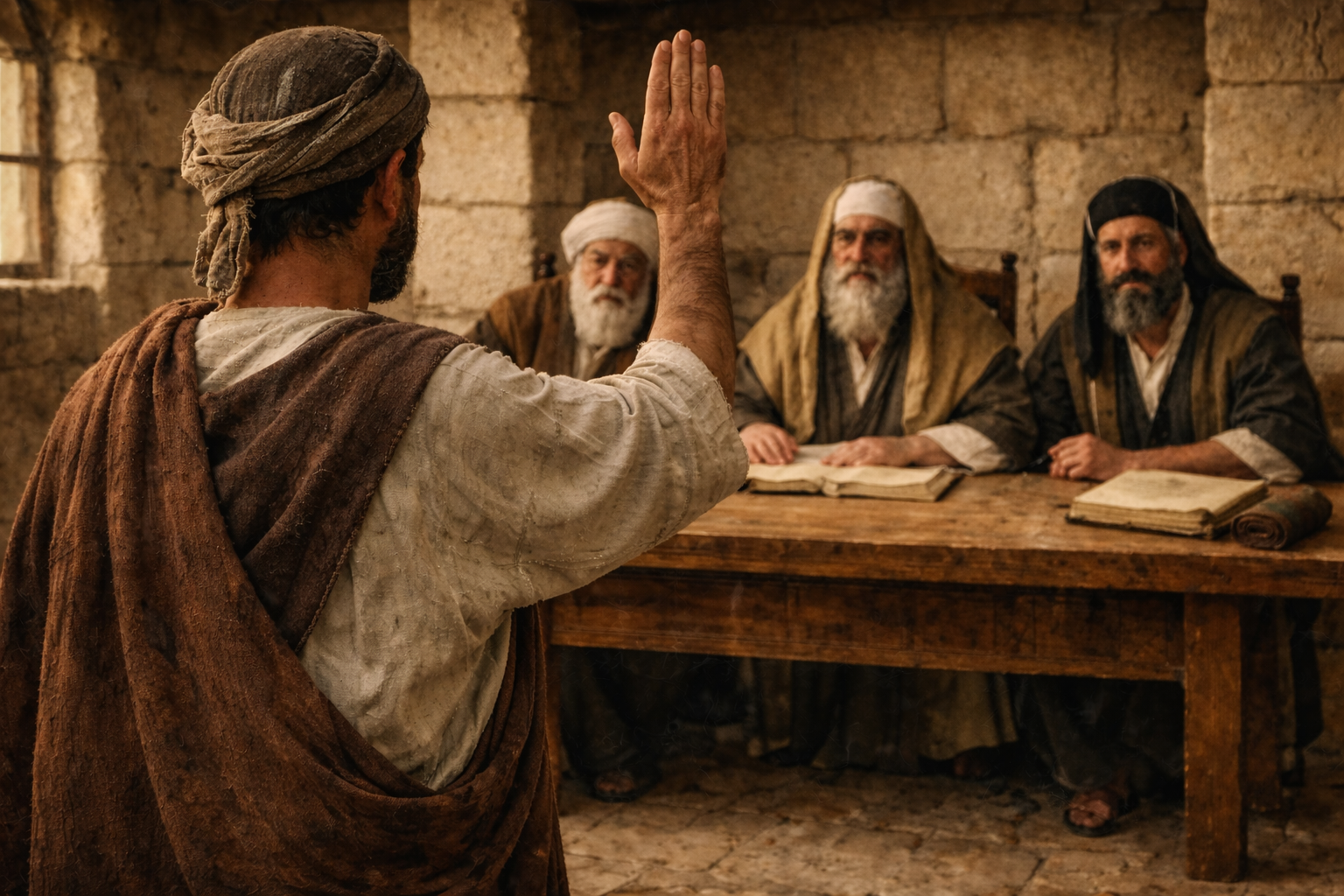
If someone entrusts an item to a free guardian and the guardian claims, “It was stolen,” the Torah requires him to take a shvu’ah—an oath—that he did not misuse the item. If he swears, he is exempt from payment.
However, if witnesses later testify that he in fact took or used the item, the Torah imposes kefel—double payment. If the item was worth one hundred, he must pay two hundred.
Yet here the halachah introduces a remarkable nuance:
If witnesses appear before he takes the oath—while he merely denies the claim in court but has not yet sworn—he does not pay double. He pays only the principal amount.
Double liability exists only if he swore falsely and then was exposed by witnesses.
This distinction demands analysis. Why is the oath the decisive factor? If he lied, he lied. Why does the Torah escalate the punishment only once a shvu’ah is uttered?
Rashi and the Meaning of “Coming Close to Elohim”
The verses in Shemot (22:6–8) state that if the thief is not found, “the master of the house shall come close to the Elohim.” Rashi explains that this means he comes to Beit Din and takes a shvu’ah that he did not “send his hand” toward the entrusted property.
The Gemara derives that this “coming close” refers specifically to an oath. Due to similar terminology which appears later regarding the Shomer Sachar, the Torah connects the concept of “sending one’s hand” and the necessity of a shvu’ah.
The halachic outcome is precise:
- Denial alone does not generate kefel.
- False oath plus witnesses does generate kefel.
This precision is not incidental. The Torah is exact in language. The shvu’ah transforms the legal and spiritual status of the act.
Why?
The Spiritual Weight of a Shvu’ah
An oath is not mere speech. It invokes the Name of Hashem. It draws Divine authority into the statement. When a person swears falsely, he does not merely lie—he attaches the lie to the Divine Name.
In halachic terms, that is why the punishment intensifies.
But in the language of Rebbe Nachman’s teachings, something deeper is occurring.
A shvu’ah creates a keter.
Keter represents the boundary between human limitation and Divine infinity. When a person makes a vow or oath, he elevates speech into a realm of binding force. He creates a connection between the Keter and his words. That crown can either sanctify or corrupt.
If he lies without swearing, the lie remains within the human realm of monetary dispute. When he swears falsely, he “crowns” the lie with Divine invocation. That misuse of keter demands a doubled rectification.
The kefel corresponds to this spiritual doubling. The act now exists in two realms—the physical theft and the misuse of sacred speech. The repayment must mirror that dual damage.
A vow is an act of coming close. One who swears approaches the Divine root. If done truthfully, it is sacred. If done falsely, it is spiritually catastrophic.
The Severity of a False Shvu’ah
The Torah’s distinction now becomes clearer. A false oath is not merely a legal lie—it is a spiritual ascent misused.
When a person swears falsely, he invokes the Name of Hashem. He elevates his speech beyond ordinary denial and attaches it to the root of creation. Rav Noson explains that both a neder and a shvu’ah function as acts of ascent. Through them, a person lifts himself to the level of Keter—the crown, the beginning point of Divine revelation.
Keter represents the root above Torah, the origin point of all emanation. To swear is to climb upward toward that origin and bind one’s words there. That is why it is so dangerous. A person is not merely making a claim—he is standing before the root of existence and declaring something as truth.
If that declaration is false, the damage is immeasurable.
What leads a person to such a place? Jealousy. Coveting. Dissatisfaction. A willingness to sacrifice truth—and even Divine sanctity—for the sake of possession.
If he were truly sameach b’chelko, happy with his portion, there would be no need for theft, no need for deception, and certainly no need for a false oath.
Shvu’ah: Seven and Eleven
The word contains two components:
Sheva (seven) and Vav-Heh (six and five).
The seven corresponds to the Sheva Chochmot—the seven branches of worldly wisdom. These intellectual faculties can be used in holiness or distortion. When used for ego, pleasure, or manipulation, they become tools of spiritual corruption. When purified, they become channels of Divine wisdom.
The Vav-Heh equals eleven. Eleven corresponds to the eleven ingredients of the Ketoret.
In Likutey Moharan Lesson 24, Rebbe Nachman teaches that the Ketoret possesses the power to subdue the forces of impurity and extract what rightfully belongs to a person. How? Through simcha. “Shemen u’ketoret yesamach lev”—the incense generates joy. And joy dismantles the grip of evil.
Someone who covets another’s possessions reveals a blemish in this area. He lacks simcha. If he were joyful and internally whole, he would not desire what belongs to someone else. His willingness to swear falsely indicates a profound inner deficiency of joy.
The false shvu’ah thus reflects both distortions: a corruption of the seven wisdoms and a blemish in the eleven of Ketoret—the absence of simcha.
The Ascent to Keter and the Punishment of Kefel
Why does the Torah impose kefel—double payment—only after a false oath?
Because the oath itself creates an ascent.
When he swears, he symbolically lifts the object upward to Keter. From Malchut to Keter are ten sefirot. The ascent spans ten levels. When exposed, the descent back down mirrors that ascent. Ten up and ten down—twenty in total.
This is the inner root of kefel.
Even the word kefel begins with the letter Kaf, which corresponds to Keter. In Kabbalistic language, the first letter of a word embodies its essence. Kefel reflects the misuse of Keter. The doubling rectifies the improper ascent.
This also explains the necessity of two witnesses. One witness—ed—can be read as ud, “until,” implying ascent. The first testimony establishes the upward exposure; the second completes the descent. Together they correspond to the up-and-down motion of the false shvu’ah.
Thus, the halachah is not arbitrary. It mirrors the spiritual mechanics of the act.
“V’Nikrav el ha’Elohim” – Coming Close to the Divine
The Torah’s wording is precise: “V’nikrav ba’al habayit el ha’Elohim”—the master of the house shall come close to the Elohim.
Why not state plainly that he must swear?
Because the Torah is revealing something deeper. A shvu’ah is an act of kirvah, of coming close. One who swears approaches the Divine root. If done truthfully, it is sacred. If done falsely, it is spiritually catastrophic.
This is why the punishment is severe. The oath is not a procedural formality—it is a spiritual proximity to Keter. To misuse that proximity is to endanger oneself profoundly.
The Torah therefore structures the law carefully. Denial alone remains in the human realm. False ascent to Keter invokes the need for a doubled rectification.
The Root: Coveting and the Absence of Simcha
At the core of the Shomer Chinam’s failure lies coveting. He sees what belongs to another and cannot remain content. That inner lack pushes him toward theft and ultimately toward a false oath.
But why is he not content?
Because he does not recognize what he already possesses.
Every Jew wakes in the morning and can say Modeh Ani. He can wash his hands in purity, put on tefillin, keep Shabbat, recite berachot. Each mitzvah is eternal gain. Nothing done in holiness is ever erased. If a person internalized this truth, he would feel wealthy beyond measure.
When one fails to value his own portion, he becomes vulnerable to jealousy. Jealousy leads to distortion. Distortion leads to desecration of speech. And desecration of speech leads to kefel.
The entire chain begins with a lack of simcha.
Mishpatim and the Joy of Adar
We began with Shekalim and the Heavenly voice declaring that the Jewish Shekalim preceded Haman’s silver. The half-shekel funded the Ketoret—the source of simcha that sweetens judgment.
Now we see that even in monetary law, the Torah subtly guides us back to the same root. True justice restores balance. Simcha protects from spiritual collapse. Keter can elevate or destroy depending on how it is approached.
The lesson is clear.
Be happy with your portion. Do not covet. Guard your speech. Recognize the eternal value of your mitzvot. When you know that Hashem values you and your avodah, you no longer need what belongs to another.
Simcha protects from sin. Simcha sweetens judgment. Simcha precedes Haman.
May we merit to internalize this message, to guard our words, and to serve Hashem with joy and wholeness.
Shabbat Shalom u’mevorach.
Meir Elkabas
This article also appears in the BRI breslov.org website: https://breslov.org/the-keter-of-the-vow/
For a video presentation of this article: https://youtu.be/aI1JJrPk5WI
This class is based on Likutey Moharan lesson 24.
For more on this lesson: linktr.ee/breslovtherapy_lesson_24
If you have been inspired by this class/lecture please share it with your friends. Thank you.
Follow us:
https://breslovtherapy.blogspot.com
Spotify: https://open.spotify.com/show/2cRAICkl6Hk9CdKUrAxSMJ
Soundcloud: @breslov-therapy
FB: www.facebook.com/breslovtherapytm.meir
To donate or sponsor a class: https://linktr.ee/breslovtherapy
Contact us:
@: breslovtherapy@gmail.com
WhatsApp: +1-732-800-1863
#breslov #breslovtherapy #rebbenachman #rebnoson #likuteymoharan#likuteyhalakhot #likuteytefilot #meirelkabas #simcha


No comments:
Post a Comment